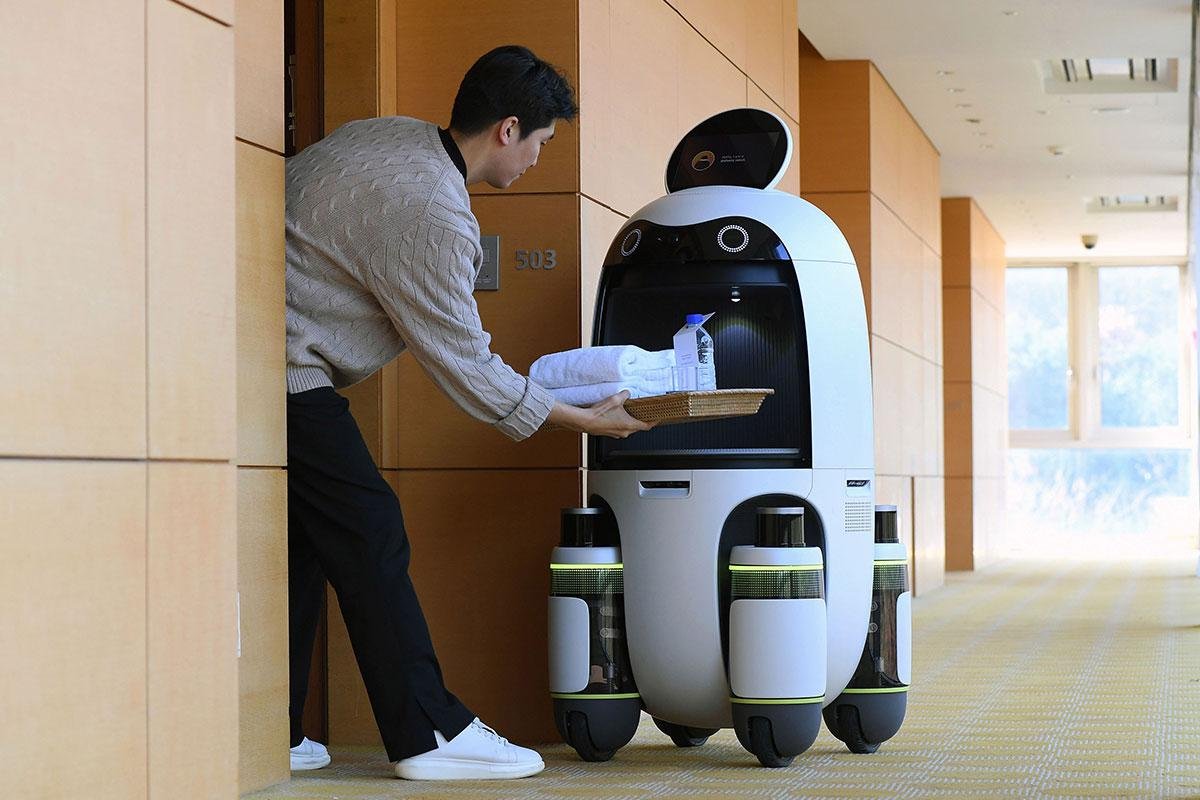
Robot-assisted service
Support projects where staff and delivery robots work together instead of operating in isolation.

Use a guest-facing communication layer that supports robot-assisted service workflows, arrival notices, delivery prompts and room-side instructions while keeping the experience aligned with the rest of the hotel’s digital service journey.
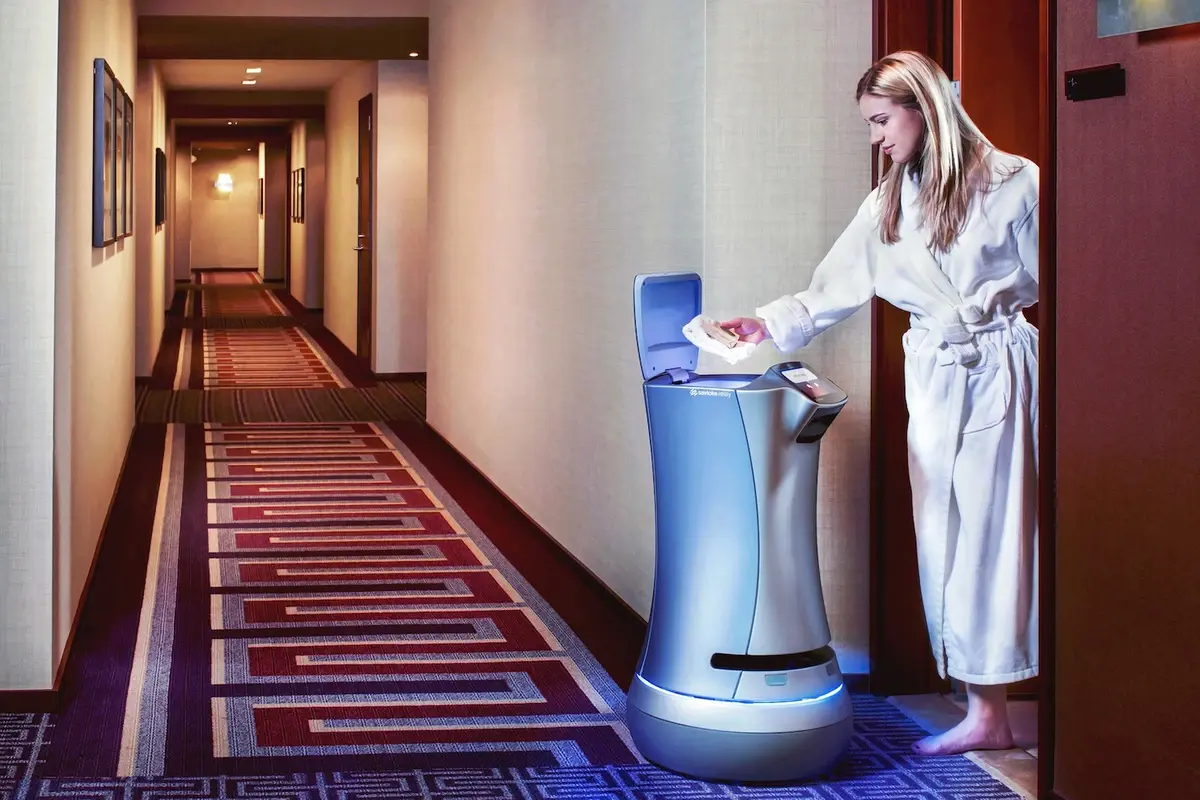
Support projects where staff and delivery robots work together instead of operating in isolation.

The screen-side message flow is what makes robot service feel clear, usable and premium.
This brief positions the robot-related solution as a communication and workflow layer, where room-side prompts, event timing and guest reassurance matter as much as the robot hardware itself.
Robot system, hotel operations or workflow triggers decide when guest-facing communication should begin.
The existing IPTV and room-side service framework becomes the language layer for guided guest action.
Guests see structured prompts through room screens and familiar hotel interface touchpoints.
Support projects where staff and delivery robots work together instead of operating in isolation.
The screen-side message flow is what makes robot service feel clear, usable and premium.
These capability blocks explain what the solution should deliver commercially, operationally and technically when it is deployed as part of a real hospitality project.
Tell guests what is happening, what to expect and what action is needed during robot-supported service moments.
Support hotel teams with message timing and service prompts that fit actual delivery workflows.
Keep assisted service communication polished and consistent with the rest of the property’s digital touchpoints.
Provide a communication surface that can work alongside robot systems, not in competition with them.
Automation projects feel credible only when innovation, operations and integration teams all review the timing, prompt logic and handoff rules behind each guest-facing moment.
Review the solution as an experience layer that makes automation understandable and credible to both owners and guests.
Focus on whether prompts, arrival notices and handoff timing support the real workflow between staff, systems and guests.
Confirm event trigger mapping, message timing rules and the responsibilities between robot platform, PMS context and room-side UI.
The architecture is organized around service triggers, room-context messaging, prompt delivery and the final guest-facing interaction point during robot-assisted workflows.
Robot system, hotel operations or workflow triggers decide when guest-facing communication should begin.
The existing IPTV and room-side service framework becomes the language layer for guided guest action.
Guests see structured prompts through room screens and familiar hotel interface touchpoints.
Staff still retain visibility and control when the project uses a hybrid delivery model.
This stack explains how robot events, PMS context, service orchestration and room-side notices should be split so automated service remains understandable to guests and staff.
The technical core of robot-assisted hotel service is the event model: delivery created, robot dispatched, robot arrived, guest notified, pickup completed and exception handled.
A robot project becomes operationally usable only when middleware rules align robot events with hotel room status, guest context and service ownership.
The guest-facing layer should present robot-related instructions through familiar hotel touchpoints, with precise timing and clear action design.
Hotels need visibility into what the robot system is doing and what the guest sees, especially during pilot operation or multi-vendor integration.
The engineering review is centered on event mapping, message timing, fallback handling and the operational boundaries between the robot platform and hotel systems.
The topology traces how a robot or service event becomes a timed room-side notice, prompt or arrival instruction at the endpoint.
Treat robot dispatch and arrival events as structured integration triggers rather than UI-only prompts.
Map room context, service ownership and exception rules in middleware before notifying the guest.
Generate multilingual notices and guided actions from one reusable message logic layer.
Deliver the final instruction path through room screens or public guidance points with traceable event history.
A professional solution document should show what systems are involved, why they are connected, who owns each boundary and what must be validated before delivery.
These bullets define what the solution team should explicitly own in design, implementation and handover, so execution responsibility stays clear from the outset.
Professional delivery depends on measurable acceptance. These checks help turn the page from concept presentation into an implementation-oriented technical proposal.
This composition shows the system layers normally required to make robot-assisted service feel coordinated rather than experimental.
Robot platform events or webhook feeds normalized into a stable hotel-side event model.
Middleware for room context, service ownership, retry logic and fallback-state governance.
Room-side TV UI and service prompts with multilingual templates and guided guest actions.
These items are common expansion directions that can be added when the project budget, timeline and integration boundary support a broader deployment.
Professional proposal pages should also state what is outside the current boundary, so commercial expectations and engineering responsibility stay clear from the beginning.
These recommendations help position the solution as a realistic project path rather than a generic concept presentation.
This gives commercial and technical stakeholders a clearer view of where the solution is strongest and most deployable.
Strong technical proposals should also state what must be true before delivery can succeed at the expected quality level.
These deliverables reflect the event maps, message rules and validation outputs generally needed for a dependable robot-assisted communication layer.
Robot trigger map, guest-notice state machine, fallback conditions and timing expectations.
Webhook/API field mapping, room-context logic, multilingual prompt set and exception routing model.
Pilot KPI baseline, route validation records, fallback workflow acceptance and support ownership notes.
These scenarios show where robot-linked guest communication adds the most value for delivery, pickup and assisted service flows.
Communicate arrivals, pickup steps and service status more clearly at the final touchpoint.
Support properties that want service automation without sacrificing communication quality.
Present a credible solution narrative to owners and operators evaluating future automation paths.
The usual project path starts with trigger definition and message logic, then moves into rule validation, pilot rooms and operational handover.
Identify the guest-facing moments where robot-related instructions or notices are required.
Map those moments into room-side prompts, service pages or branded notification logic.
Decide how hotel operations, PMS context and third-party robot triggers will coordinate.
Launch with a controlled service script that feels premium and easy to understand.
Current catalog products are strongest on the screen-side experience, server core and media-distribution layers that support robot-assisted communication scenarios.
Guest-facing screen endpoints that present arrival notices, pickup guidance and structured prompts during robot-assisted service flows.
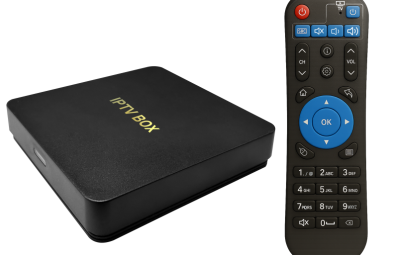
SKD8315 IPTV Android Set Top Box is a guestroom IPTV set top box. It is designed for guestrooms and hospitality endpoint scenarios where the property needs Andr...
View ProductCentral service and messaging layers that translate robot events, hotel workflow triggers and PMS context into usable guest communication.
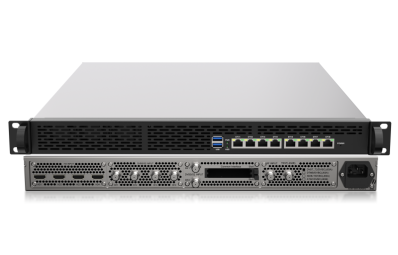
SKD7200N All-in-One Hotel IPTV Server and Streaming Gateway Device is a hotel IPTV streaming server. It is built for hospitality IPTV deployments that need sign...
View Product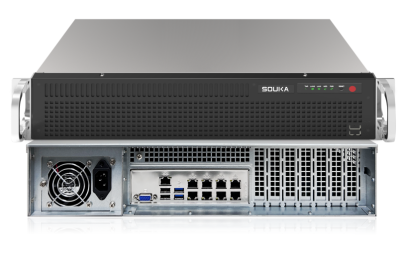
SKD3308M Hospitality VOD IPTV Streaming Server Support 100 HD Channels and 1000 Users is a hotel IPTV streaming server. It is built for hospitality IPTV deploym...
View Product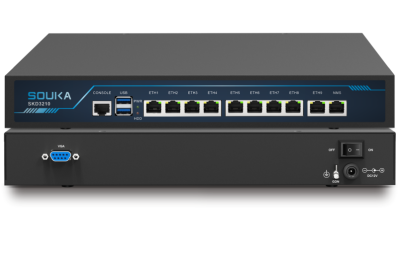
SKD3210 IPTV Server for Hotels Support 200 Users 50 HD Channels is a hotel IPTV streaming server. It is built for hospitality IPTV deployments that need signal...
View ProductShare the robot use cases, PMS environment, handoff workflow and guest communication expectations. We can then recommend the right event model, room-side prompt layer and supporting product stack.


By clicking the button, you are agreeing with our Term & Conditions
