
A technical guide to planning a unified Ethernet backbone for IPTV, room control, signage, and service applications in modern hotel projects.
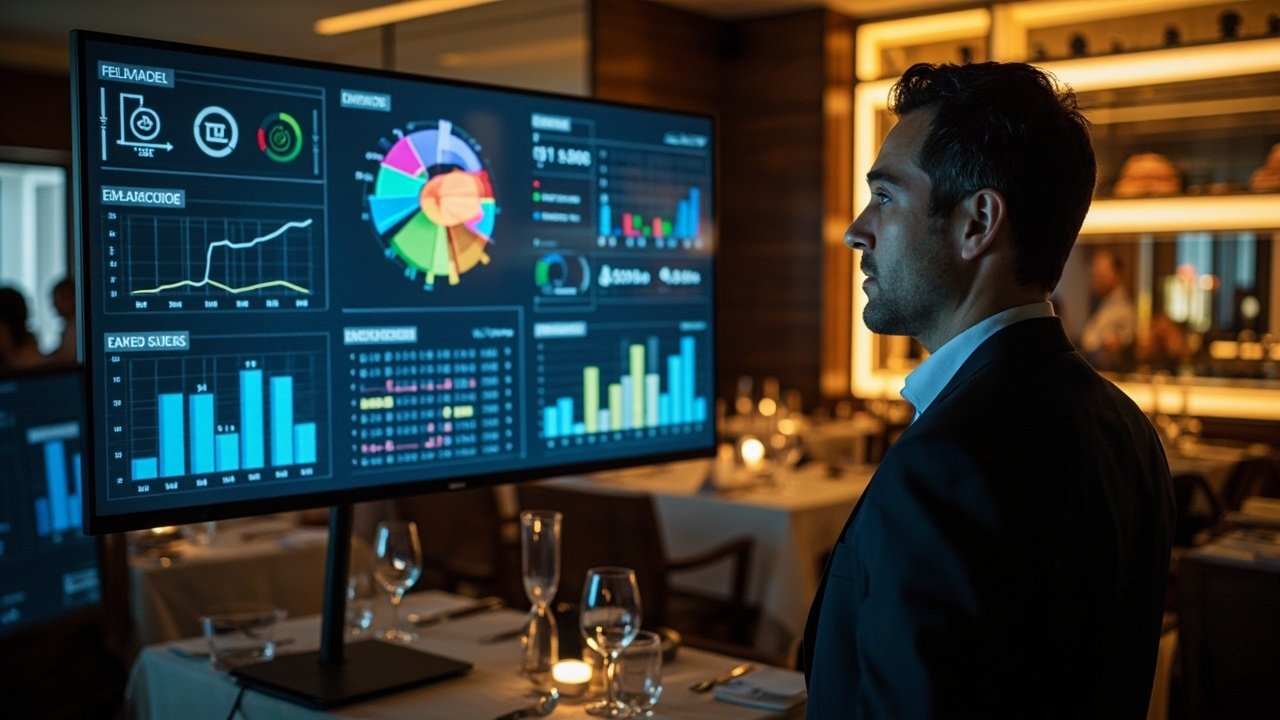
Network design is one of the least visible but most decisive factors in smart hotel delivery. A property may invest heavily in IPTV, guest room control, digital signage, self-service terminals, and service workflow software, but if those systems are built on inconsistent network assumptions, the project becomes harder to commission, harder to troubleshoot, and harder to expand. That is why more hospitality teams are moving toward a unified Ethernet architecture as the foundation for smart hotel deployment.
The goal is not to flatten every subsystem into one undifferentiated network. A good backbone design still uses segmentation, security rules, and clear traffic policies. What changes is the planning logic. Instead of allowing each system supplier to define its own transport assumptions in isolation, the hotel establishes one controlled network framework that supports guest experience, technical maintainability, and future growth.
Hospitality projects often inherit layered decisions from different stakeholders. Television delivery may be scoped by one party, room control by another, signage by another, and guest-service software by yet another. If those workstreams only reconcile at commissioning, the project loses time and money in late-stage integration. A unified backbone is valuable because it forces these conversations to happen earlier, while architecture, addressing, traffic policy, and interface ownership can still be managed deliberately.
This matters commercially as much as technically. Unclear backbone logic creates duplicated switching, unstable device communication, poor fault isolation, and unnecessary gateway dependency. All of those costs eventually surface as implementation delay, service inconsistency, or long-tail support burden.

A modern smart hotel backbone must carry more than media traffic. It must also support room-side control devices, signage players, selected IoT endpoints, kiosks, operator dashboards, and interfaces to external systems such as PMS, lock, and building management platforms. In practical terms, this means bandwidth planning and segmentation policy should reflect how the hotel actually uses digital systems, not just how the subsystems are sold.
Endpoint strategy is one of the first major design decisions. Teams need to confirm whether room logic relies on edge gateways, direct IP devices, hybrid control stacks, or some combination. That decision affects switch count, cabling design, troubleshooting path, and lifecycle replacement strategy. If room topology is vague, the broader backbone design will remain unstable no matter how polished the architecture diagram looks.
Traffic modeling is equally important. IPTV may introduce multicast or heavy unicast demand, but that is only part of the picture. Content updates, signage synchronization, status polling, service dashboards, and event-driven integrations all affect the real operating load. Hotels that plan only around nominal media traffic often discover performance issues after guest-facing systems are already live.
A strong hospitality backbone should define VLAN strategy, QoS policy, addressing rules, switch hierarchy, redundancy assumptions, and support ownership before implementation freeze. These controls make it possible to separate critical paths without duplicating infrastructure for no reason. They also make future expansion more realistic. A hotel that wants to add digital concierge functions, mobile key interactions, or new room-side applications should not need to redesign the whole network every time the guest experience evolves.
Security must be built into the same design conversation. A unified network is not a more exposed network if it is segmented correctly. In fact, it is often easier to secure because the architecture is documented and intentional. Device access rules, control-plane protection, logging, and interface boundaries become more transparent when the backbone is planned as one governed system rather than several loosely connected sub-networks.
Hotels benefit from a unified backbone long after project delivery. Fault isolation becomes faster because engineering and IT teams can distinguish whether an issue belongs to the endpoint, switching layer, application layer, or external integration boundary. Documentation becomes more meaningful because topology and interface rules are tied to real operating behavior. And future upgrades become less disruptive because the property already has a controlled network model for growth.
This is especially important in upscale and branded hospitality environments where support quality influences guest satisfaction. A property cannot claim a strong digital guest journey if the systems behind it are difficult to diagnose or maintain. The backbone is where hospitality technology becomes operationally credible.
The best way to validate backbone logic is through a pilot environment: a model room, a sample floor, or a controlled zone where the main traffic types and interface events can be tested under realistic conditions. Pilot validation reveals issues that pure design review often misses, including switching behavior, gateway performance, timing conflicts, and room-side response consistency.
For project teams, the conclusion is clear. Smart hotel backbone design should not be treated as a generic network task done after products are chosen. It is part of the solution architecture itself. The earlier the hotel establishes a unified Ethernet framework, the stronger its IPTV, room control, signage, and guest-service systems will perform together.

 Superadmin ZHANG
May 04, 2025
 Superadmin ZHANG
May 04, 2025


By clicking the button, you are agreeing with our Term & Conditions


